
The Future of Work Starts Here: Inside the Founding of PayStandards
Most startup stories are about timing. The story behind PayStandards is just as much about perspective.
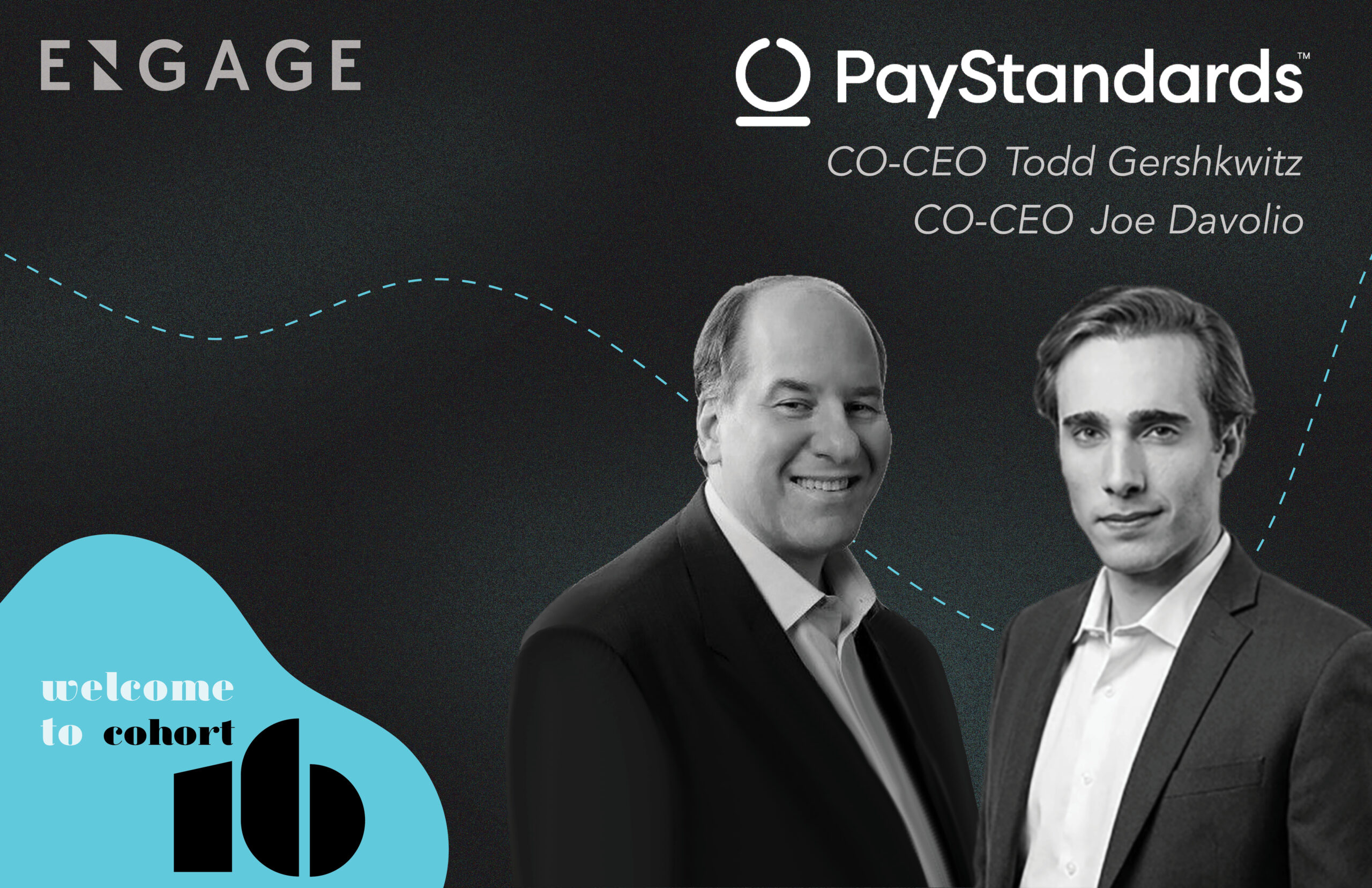
Todd Gershkowitz and Joe Davolio came to create the company from completely different stages of life and different careers. Todd spent more than three decades as a corporate HR executive and consultant , watching companies spend considerable sums in ways that never created lasting change. Joe came from tech, policy, and finance, with the belief that uniting the best elements of each of those worlds could fundamentally change how organizations make critical people decisions.
What brought them together was a shared frustration. Pay decisions at most companies still rely on fragmented systems, manual processes, and inconsistent judgment, despite compensation being most companies’ largest operating expense.
That frustration eventually became PayStandards, the AI-native platform that helps organizations make better pay and people decisions.
Different Paths, Shared Mission
Todd’s career started long before AI became part of the business conversation.
Over 30 years in corporate HR and Total Rewards leadership roles, he worked across large global enterprises including GE, UBS, and State Street, started his own consulting firm advising Board compensation committees that he merged with a larger firm, spent years living abroad in Asia and Europe, and is an avid angel investor in early stage technology companies. He saw firsthand how HR technology has failed to deliver on its promise of increased decision-making efficiency and effectiveness.e. and also watched companies bring in consultants and lawyers to conduct pay equity reviews, only for the same problems to resurface the following year. With new pay transparency regulations in the EU, which affect U.S. and global companies with EU operations, and on the rise in the U.S. at the state level, he sees this problem worsening considerably unless new solutions become available.
Coming from a family of public school teachers, Todd grew up seeing how difficult and inconsistent compensation systems could be for people doing deeply important work. Todd’s time in the corporate world also made him realize that corporations implemented multiple layers of check and review processes intended to ensure that compensation decisions were based on only the right factors, such as performance, job requirements, and market pay practices. This led to the year-end compensation decision-making process taking six months at most companies without much improvement in decision quality.
Joe’s path looked different.
He studied at Cornell’s Industrial & Labor Relations (ILR) School, which had a tagline, “Future of Work,” and worked at The White House. Later, he built his first startup from scratch: a cloud-based POS system that used AI and analytics to predict purchasing behavior years before the technology became mainstream. He then worked in investment banking at Goldman Sachs.
The two initially connected through Kevin Hallock, a labor economist and the Dean of the ILR School at Cornell at the time, as Todd was also a graduate of the ILR school and active alumnus. Kevin is now the president of the University of Richmond and serves as an advisor to PayStandards.
Todd and Joe’s conversations turned into a consistent rhythm of monthly calls, dinners in New York, and eventually a realization that they were thinking about the same problem from completely different angles.
“One of the biggest advantages we had early on was that we saw the world differently,” they shared. “But we were trying to solve the same thing.”
Why the Co-CEO Model Works
Co-CEO structures are rare in startups. Todd and Joe see theirs as a competitive advantage.
Todd brings decades of domain expertise in compensation, HR technology and HR transformation, decades of experience at the executive level of large, global companies, and has been an investor in, and Board member of, several early stage companies. Joe brings product, technology, and business-building experience. Rather than forcing one person to stretch across both worlds, they intentionally built the company around complementary strengths.
That partnership became even more important as PayStandards evolved.
The company originally started as a SaaS platform designed to simplify and improve compensation analysis and deliver a self-service solution that produces sustained outcomes to reduce dependence on expensive consultants who deliver one-time solutions. But about two years ago, they made a difficult decision: walk away from growing demand for the existing platform and rebuild the company as an AI-native platform.
They believed agentic AI could fundamentally change how compensation decisions are made and ultimately create significant value for companies. As they have noted, fair compensation decisions reflect performance more prominently – as by definition they exclude the impact of factors that should never be included – and agentic AI’s ability to leverage large amounts of data and process it more objectively and efficiently than a human can makes it uniquely suited to reinvent how compensation is managed at large enterprises.
Today, PayStandards functions more like a digital advisor than a traditional HR tool. The platform integrates fragmented data sources, drives competitive and compliant pay and performance decisions in real time, and helps organizations embed fairness and accountability directly into compensation workflows instead of reviewing them after the fact. Next they are planning to bring this approach to all talent decisions.
The founders believe this shift is much larger than HR software. “Pay represents over half of global GDP,” they explained during our conversation. “Yet most pay decision processes haven’t meaningfully changed in 30 years—and pay is just the starting point” They also point out that AI both exacerbates the problem and is the solution that companies are facing: “The value of human talent that either has direct AI expertise or knows how to leverage AI to enhance their productivity and performance is going to increase dramatically and HR needs new AI-powered solutions to successfully navigate this new talent terrain.”
Building for the Reality of HR
One thing that stood out was how grounded both founders are in the day-to-day reality of HR teams.
They aren’t building AI for the sake of AI. They’re building tools for HR leaders who care deeply about making thoughtful decisions but are stuck navigating spreadsheets, disconnected systems, manual approvals, and inconsistent processes. Their goal is to eliminate the administrative burden that prevents managers from having better conversations with employees about their performance, pay and career., and frees up HR to focus more on advising managers on strategic people issues confronting the business.
That practical approach is resonating with customers.
The founders say most enterprise customers are far more open to AI experimentation than many people assume. Instead of fearing the technology, many HR leaders see it as a way to finally solve problems that have existed for decades. They also noted that visionary Chief Human Resources Officers and Chief People Officers think HR should be the role model for enterprise AI adoption as the function needs to help the rest of the business adopt and integrate AI by advising them how to deal with workforce displacement issues, learning needs, and change management. Joe and Todd argue that PayStandards’ platform enables HR and the business to focus on these critical strategic issues by simplifying and improving how the business makes decisions.
A Different Kind of Accelerator Experience
Both Todd and Joe admitted they were initially skeptical about a startup “accelerator.” Like many founders, they’d seen programs promise meaningful connections without delivering much beyond surface-level networking. What stood out was how genuine the experience felt once they joined, from Engage’s unique business model, the accessibility of the Engage team, the quality of relationships formed with corporate partners and fellow founders, and the active role they play in helping founders connect with corporate partners.
For PayStandards, those conversations became especially valuable as they navigate AI adoption inside large enterprises. The founders appreciated the openness and curiosity from corporate leaders willing to engage in honest discussions about innovation, workforce transformation, and the future of HR. Over time, Engage became less of a traditional accelerator experience and more of a meaningful extension of their broader startup journey.
The Founder Equation
When asked what drives success as founders, Todd and Joe point to these things:
“Nimbleness + Agency + Constructive Challenge”
An openness to pivot toward bigger opportunities, believing a small team can drive meaningful change, and constantly pushing each other through honest debate and tough conversations.
For two founders coming from entirely different careers, that balance has become one of PayStandards’ greatest strengths. And in a category as complex and consequential as the future of work, it may be exactly what makes the company work.
Recent Comments