
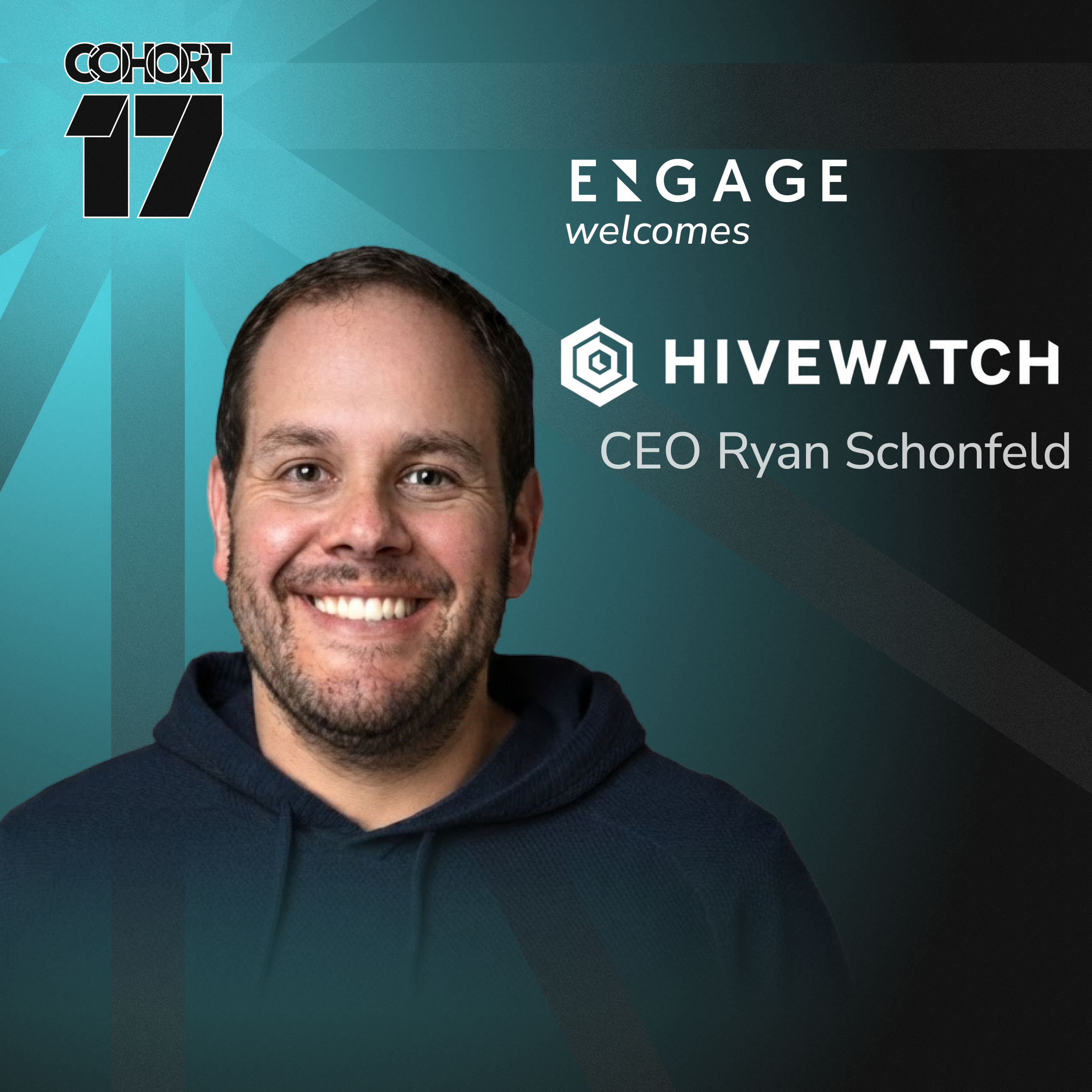
From Police Officer to Tech Entrepreneur: The Story of Ryan Schonfeld and HiveWatch
Ryan Schonfeld’s law enforcement career almost ended before it started. He and seven classmates failed their first physical fitness test at the police academy. The instructor burst into the classroom with a stack of Burger King applications he’d already filled out. He dropped one on each desk and told them that was their futures.
Ryan never did flip burgers, unless you count his backyard. He became a police officer, then a detective. That path ultimately led him to found HiveWatch, which builds an AI-powered operating system for enterprise security teams. It pulls a company’s cameras, alarms, calls, guards, intelligence, comms and access controls info into one place. With everything in one view, HiveWatch separates real threats from false alarms in seconds, so teams spend their time on real incidents.
Some of the biggest household-name companies in the world now run security on it. Getting there took 150 investor rejections. Then there was the year Ryan was sure the company wouldn’t survive.
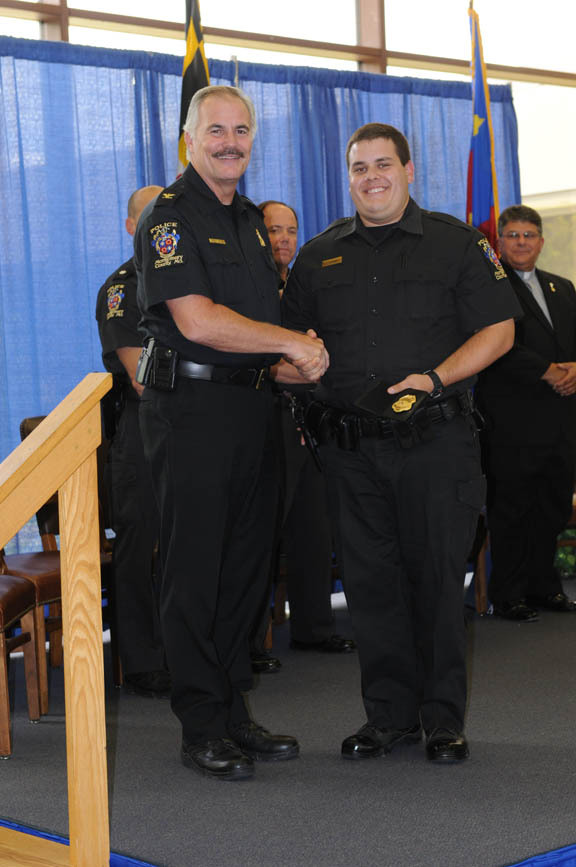

He Decided in First Grade
Ryan grew up in Chicago. His first look at entrepreneurship came from his dad, a physician who left traditional practice to start a company with Ryan’s mom. They took a niche area of medicine and grew it into a strong business.
He grew up fortunate, and his family made sure he knew it. They brought him along to do community service with people experiencing homelessness and mental illness. Police were a constant presence, too. By first grade, he had decided to become a cop. Most kids grow out of the police officer and firefighter dream. Ryan never did.
By the time he arrived at college in Washington, D.C., public service was an important part of his life. He continued this in D.C.: He volunteered at the local fire department for about 10 years, interned with a probation and parole unit that ran vocational training to help prevent former prisoners from returning to jail, and worked as an investigator for the Public Defender Service. In that role, Ryan went into the community to interview people and help public defenders prove their clients’ innocence. For a future cop, that was a rare look at what he calls “the other side of the equation.”
Another impactful internship was with the Naval Criminal Investigative Service (NCIS) … not the TV show. Within the first few weeks, Ryan identified a process that was manual and cost the government a small fortune. He took it upon himself to automate it. When he presented what he built, the Agency sent Ryan to train their agents on the newly adopted process.
Criminals Were Winning with Technology
Ryan went straight from college into the police academy, and he loved that work. “You see people at their worst and you’re one of the few things in that moment that can help,” he says.
For a while, he was a part-time school resource officer at a school with a large gang population. He broke up fights and was even electrocuted putting out an electrical fire that broke out. He also helped some kids get out of gang life, something he counts among the most meaningful parts of the job.
It was also the early days of smartphones and social media. Criminals were putting new technology to work while law enforcement was still figuring out what to do with it, and Ryan was frustrated.
“The criminals were beating us with technology,” he says. So he went back to school for a master’s in IT and earned certifications in computer crimes. The State Department brought him on to train police in allied countries on identifying and seizing digital evidence. That included a few weeks living in Ecuador, teaching the National Police.
He Bet on Himself
When Ryan married his wife, who’s from Los Angeles, they had to choose. They could start a family near his relatives in Chicago or near hers in LA. They chose the beach and year-round sunshine.
His first LA job was at one of the largest security guard companies in the world, looking for ways to bring technology into guarding. He loved the problem they were solving. The company wasn’t the right fit.
Next came Fox Entertainment. He started by managing global investigations, then moved into a newly created role running global security technology. That’s where he first tied together disconnected security systems across Fox’s global footprint, including acquisitions. He loved this work, too. He also knew the corporate structure would always limit him. So on the day he and his wife found out she was pregnant with their second child, he decided to quit. Fox became the first client of his new consulting firm, RAS.
The firm helped companies bring technology into physical security operations. It took off quickly and grew to about 20 people. Then Ryan ran into the limits of consulting. No matter what he charged for his time, clients still wanted him personally, and there was only so much of him to go around.
At the same time, several clients needed security operations centers they couldn’t build themselves. So he launched a GSOC-as-a-service business. Suddenly every problem he’d ever seen with disconnected security systems was multiplied across every customer.
Ryan had no interest in building software. He searched for something he could adapt, even tools outside security like Zendesk. None of them could handle the basics: video, access control, guard management. If the software he needed didn’t exist, he’d have to build it himself. Enter HiveWatch.
150 Nos, Then One Yes
On paper, Ryan was everything investors are taught to avoid. He had no co-founder and no previous exits. He was technical by security standards, but not by Silicon Valley’s. He also hadn’t gone to Stanford or what one firm called a “center of excellence.” He knows because he saw it in the firm’s deal memo explaining why it passed. “I wasn’t supposed to see the memo,” he says. What Ryan did have was founder-market fit.
HiveWatch heard 150 nos before its first yes on the seed round. The excitement didn’t last. It gave way to the realization that “now we actually have to go build something.”
The first customer was Cruise, the self-driving car company. Ryan stood in its security operations center the day HiveWatch went live, something he still does for many customers. About five minutes in, the system caught someone tailgating through a secure door. The buyer next to him nonchalantly said, “Huh, it’s just like the demo,” and moved on. To Ryan, it was the most exciting thing he’d ever heard. He slipped into an empty conference room to smile for a few minutes before coming back. “Now I’m fine just doing it in front of them,” he laughs.
That early product connected disparate systems and caught tailgaters. Ryan soon realized it was too expensive for the value it delivered. HiveWatch broadened into guard management and incident management and rethought its pricing. Then the results at Cruise made the case on their own. The company cut $10 million a year from its guard budget, about $28 million in net savings over a three-year contract.
To Ryan, that meant two things. HiveWatch was probably charging too little. More importantly, he had found a way to put a real number on the return from security spending, something the industry had always struggled to do.
“People Are Copying Us”
Tailgating detection was HiveWatch’s first use of AI, but back then Ryan barely talked about it. Buyers were wary of AI. So while everyone else added it to their pitch, HiveWatch took it out of its marketing entirely. Its investors weren’t thrilled. “If you want people to buy this, you’ve got to do what the market needs,” he says.
About two years ago, the market caught up. HiveWatch shelved its entire roadmap to go all in on an AI Operator, and made sure it was the first to announce one. Within weeks of HiveWatch’s announcement, two competitors announced their own. One released a launch video that was nearly a copy of HiveWatch’s. His team was furious. Ryan couldn’t have been happier. “We’re doing the right thing,” he remembers thinking. “We struck a nerve. People are copying us.”

Outsiders Who Work with Insiders
The way Ryan sees it, companies building for physical security tend to fall into two camps. Longtime industry players make small improvements on the way things have always been done. He calls that the “lipstick on a pig” model.
Then there’s what he used to call the “Stanford model.” He was going to rename it once Stanford invested in HiveWatch’s Series A, but it was a good reminder of the “center of excellence” reason for an investor passing on HiveWatch. In the “Stanford model”, brilliant technologists build impressive technology, then go looking for a problem. The products often end up too expensive, don’t scale and miss the heart of the issue.
HiveWatch sits closer to that second camp but stays grounded in the first. By design, 95+% of the team comes from outside the security industry. They always work alongside people from inside it, so what they build stays rooted in the real problems customers face.
Running its own GSOC is the other thing that sets HiveWatch apart. It used to be a fundraising headache, with investors asking whether HiveWatch was a software company or a services company. Today that part of the organization is a real edge over the competition: it feeds HiveWatch’s data and AI, and gives the company instant credibility with customers.
“We run the same security room and have the same problems that you have,” Ryan says, “and we’ve solved it with our software.” With household-name enterprises relying on the product, a big part of the job now is making HiveWatch even more exceptional for the customers it already has.
He Didn’t Buy it at First
Ryan first heard about Engage years ago. By his own admission, he didn’t buy it. “Every investor talks a big game,” he says, and he doubted Engage could really do what it said it did. It fell off his radar for about two years.
Then, after HiveWatch’s Series B, Anthos Capital told him it was the real deal. What finally convinced him was the executive reception, which Ryan attended before HiveWatch had even joined a cohort. He watched the corporate partners show up and spend real time with founders. His thought: “This may actually be real.”
Now that HiveWatch is in the program, Ryan and his team keep remarking on how organized it is and how well it uses their time. They’d already built their enterprise sales motion through years of trial and error, so Engage has been more validating than eye-opening. As Ryan sees it, that extra push goes even further when you already have the basics figured out.
Ryan’s Founder Equation
Ryan’s coach tells him he’s bad at recognizing his own success. In his mind, HiveWatch hasn’t gotten there yet. Still, he’s proud of the product and proud of the team. He’s proud that a company almost no one had heard of a few years ago now has a strong reputation in a big, legacy industry.
One of the most rewarding parts of the job is also one of the most stressful: how many people HiveWatch employs. He feels both every time an employment verification comes in because someone is buying a house or a car.
To stay steady, he works with two coaches, one one-on-one and one with a group of founders. He’s built a leadership team he trusts, so he no longer carries everything himself. He’s also hooked on hot yoga, the only workout he’s found where he can forget about the outside world, “mainly because I’m trying not to die.”
Never quit. His equation starts with the moment HiveWatch almost didn’t make it. Before it was HiveWatch, it was RAS Watch, named for his initials. Ryan funded it himself just a month and a half before COVID hit. By mid-2020, he was sure the company was going under. He knew he’d be fine. What he couldn’t stand was letting down his employees or losing the friends and family money he’d raised. That kept him going. “I’ve heard all the stories about how companies fail because they run out of money,” he says. “I think they fail because people quit. If you don’t quit, you can always figure out the capital part.”
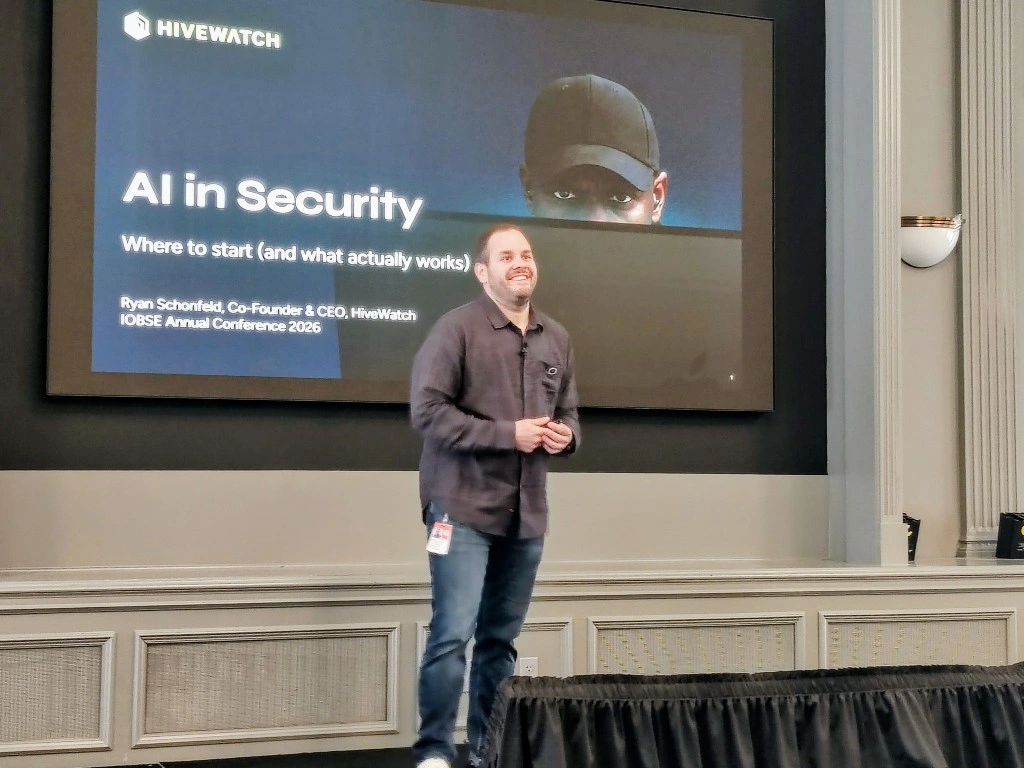
Networking and reputation. This was the hardest thing for a former cop to learn. It’s also the number one reason HiveWatch gets in front of Fortune 500 decision makers and onto conference stages.
Do what you say, and call people back. This one goes back to his consulting days. His biggest differentiator and founding principle was “do what you say you’re going to do and call people back.
“You can get away with a lot of mistakes and not being perfect all the time if you do those things,” he says, “because you build really good relationships and trust.”
Never quit + networking and reputation + do what you say (and call people back)
The academy instructor thought he had Ryan’s future all figured out. He never could have imagined that the biggest companies in the world would one day trust Ryan with their security. Ryan had it his way.
Recent Comments