
Learning from Experience: The Story of Brayden Levangie and Causality
When Brayden Levangie was nine years old, he mapped out his entire life, and at the center of that plan was a company. He even gave it a name, Levangie Laboratories, and figured he would finally get around to starting it sometime in his late twenties.
He’s 21 now and that company is already here. Brayden is the Founder and CEO of Causality (which still sits under Levangie Laboratories (LLABs) and is building a new kind of learning architecture that lets AI systems learn from their own experience over time, much like people do. By any measure, he’s well ahead of the plan he made as a kid. And yet he still feels like he’s running behind.
Bedtime Reading
Brayden was born in Georgia and grew up mostly in Alabama, moving around the South with a family whose life revolved around the church. For the first 20 years of his life, his dad was a pastor and his mom served alongside him. Nobody in the family had a scientific background but Brayden was (in his words) a huge nerd, the kind of kid who read science textbooks to fall asleep at night. By the time he dreamed up his company at nine, he had already started teaching himself college-level mechatronics, robotics and computer science.
The church ended up shaping him in a way he didn’t expect. His dad spent years as a youth pastor at a large church in Alabama and from age six, Brayden helped him run big community events, spending much of his childhood surrounded by people two or three times his age. Brayden openly shares that he has severe Asperger’s and doesn’t naturally pick up on social cues, so those years became a crash course in connecting with people. “I’ve sort of been trial by fire on how I’ve learned to communicate over time,” he says, and he credits that experience for how well he communicates today.
Those years weren’t easy though. When Brayden was 13, his family lost their home, had to move in with his grandfather, and relied on food stamps until about two years ago when Brayden’s work finally made it possible for them to stop. They’ve been “through he** and back” together, which is why to this day, he still calls his parents five to ten times a day.
Ahead of Schedule
By just 14, Brayden was doing research at MIT Lincoln Laboratory. Around the same time, he got early access to GPT-3 back when OpenAI was still a very small lab, and used it to build what he describes as the world’s first retrieval architecture for letting AI search the internet. He ended up giving some of OpenAI’s researchers pointers on a project that later became WebGPT, their effort to make GPT-3 accurate at answering questions from the web. As Brayden tells it, they were trying to figure out how a 14-year-old was getting better results than they were.
By 16, he was working as a lead AI engineer at established AI startups in New York, which made what was happening at school all the more frustrating. His small high school “in the middle of the woods” was still teaching Scratch (a beginner coding tool) to seniors. So mostly out of irritation, Brayden rewrote the computer science curriculum himself to cover electrical engineering, Arduino microcontrollers and Python. He taught it his sophomore and junior years, then trained a teacher to take it over and it’s still the school’s standard curriculum today.
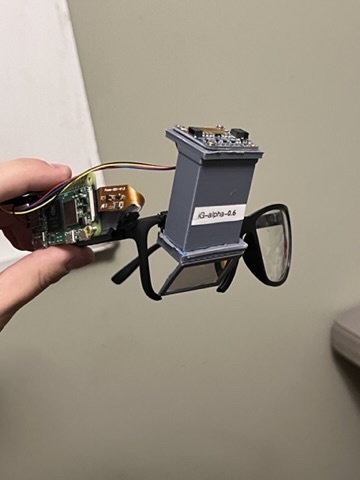
College didn’t hold him for long either. At the Rochester Institute of Technology, he helped teach a graduate machine learning class in his very first semester and helped university leaders accelerate their AI research. After two semesters, he decided college wasn’t the fastest path to where he was going and he left to start the company he’d been planning since he was nine.
The Companion Core
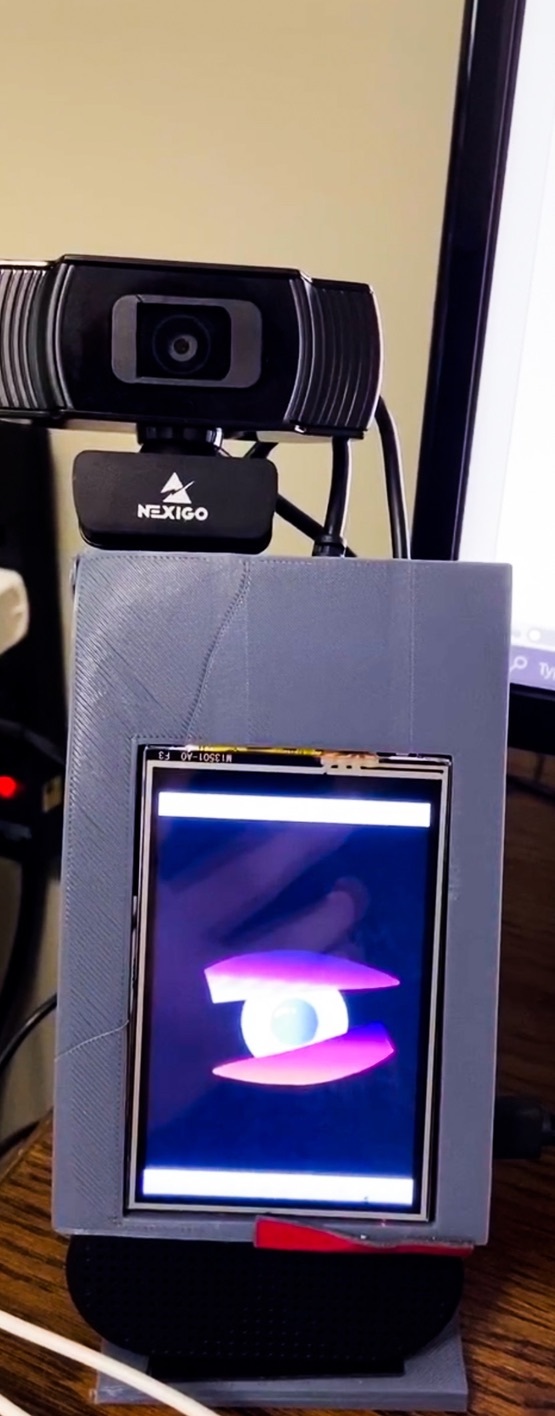
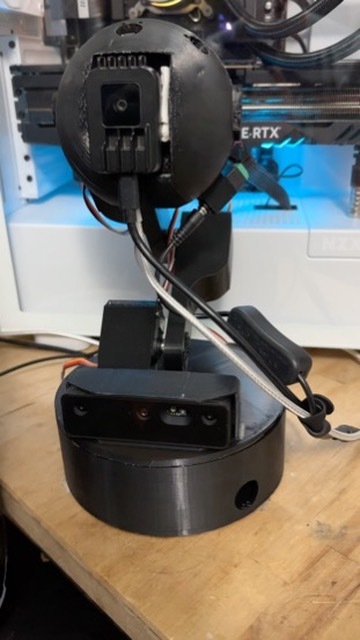
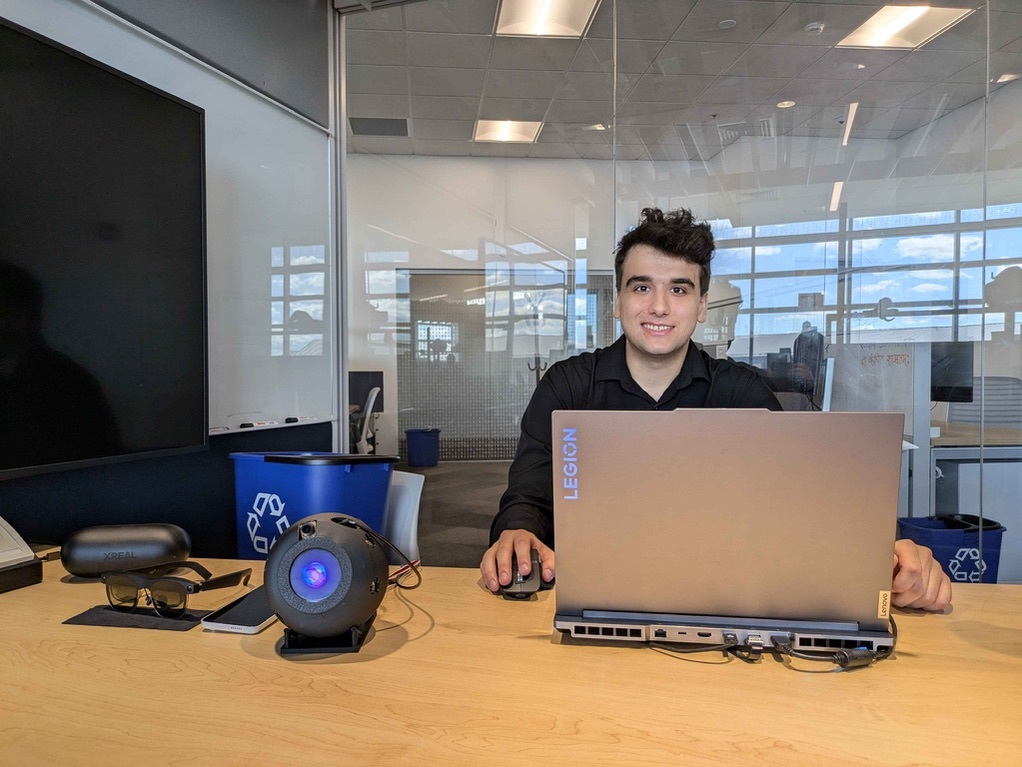
What most people don’t know is that the technology behind Causality actually started as a robot. For most of his life, Brayden assumed he’d be building a robotics company and in 2020 he began building the Companion Core, a fully multisensory robotic AI system that would go through more than 100 iterations. The first version was about as scrappy as it gets: a webcam, a small screen with a Raspberry Pi attached to the back and a 3D-printed box stuck to a speaker with double-sided mounting tape. It ran on an early GPT model through an inference server on a desktop computer he paid for by mowing lawns and working in the dining room of a retirement home. By 15, he was hand-designing and printing his own circuit boards for its motor controls and its array of microphones.
For about five years, the Companion Core grew up alongside Brayden and his family. He gave it an evolutionary architecture so it could take part in its own development, building on its own programming as it went. As it learned to communicate with the people around it by understanding the intent and judgment behind what they said and remembering its experiences with them, something new began to take shape. “It’s very difficult to believe,” Brayden says, “but the architecture was mostly emergent from this system living alongside me and my family and developing social communication skills.”
In a way, the robot learned to communicate the same way Brayden did, by spending years around people and paying close attention. That process became the foundation of Causality’s causal trajectory learning architecture, a system that can sit on top of any AI model and let AI agents actually learn from their own experience over time. Brayden chose to launch as a software company first because software scales faster than robotics, with plans to bring the technology back into the physical world as the company grows.
Earning the Meta Title
Brayden recently rebranded the company. Levangie Laboratories remains the legal name, but the public-facing tool is now Causality and he explains the choice with a comparison. “It’s like Facebook to Meta,” he says. “You need to earn the Meta title by being bigger than Facebook.” For now, Causality is the Facebook and Levangie Laboratories is the Meta he plans to grow into.
That’s because Brayden doesn’t see himself as building just an enterprise AI company, or even an AI company at all. Ever since he was young, he has also researched biotechnology, cybernetics and aerospace, including satellite design work at MIT. The long-term goal has always been a multidisciplinary enterprise focused on research, engineering and discovery across every field of science and technology. “I can either choose to create a thousand companies in all the different fields of science and tech,” he says, “or I can build one company that can then automate all of those companies after.”
The key to getting there is teaching AI to learn from human judgment and experience rather than just following instructions, so people can create what he calls “a digital extension of yourself.” In his view, the world shouldn’t have to wait for the next generation of geniuses to come along to solve the problems affecting billions of people. Internally, he calls Causality a “Kardashev accelerator,” a reference to the scale that measures how advanced a civilization is, because the goal is to help humanity make centuries of progress in a matter of years.
To reach all of humanity, he’s starting with the largest enterprises in the world. They shape how entire industries run so changing how they work creates a downstream effect on everyone else, and Causality has already landed its first major enterprise deployment with one of the largest finance companies. From there, the next frontier is physical AI, which would bring the technology full circle, back to where it began. By applying the same architecture to spatial data from sensors like LiDAR, Brayden believes robots can learn from their environments the way growing humans do, merging language and the physical world into one intelligence. And he is already building relationships with leading robotics companies to get there.
Never Fast Enough
Ask Brayden what he was thinking as a nine-year-old teaching himself engineering and his answer comes quickly. “I was thinking I’m not moving fast enough,” he says. “I need to be a lot farther along by now.” That impatience has driven his entire life and it hasn’t let up. “I’m only 21, and I still believe I should have started this company five years ago.”
His definition of success hasn’t gotten any smaller either. At nine, it was that the ships that one day carry humanity across the stars would run on his technology and that’s still basically the goal. What has changed is how he measures progress along the way. Success is no longer a finish line but “a baseline that keeps increasing.” Once Causality raised its round, his focus turned to landing a deployment, and once it landed that, he wanted to know why he hadn’t closed the rest of the Fortune 500s yet. “It’s basically a constant series of unsatisfying results,” he says.
So when things get hard, he doesn’t look for an escape from the work. He pours everything into it. “I could not imagine myself doing anything but what I’m doing now,” he says, “but at a faster pace.” What keeps him steady is the family he leans on constantly, along with a worldview he calls optimistic nihilism. “If nothing truly has any inherent objective purpose,” he says, “then why not spend every waking second that you have trying to make maximum potential and maximum progress out of every breath that you have?” It’s also why he gets frustrated watching people spend so much energy fighting each other on what he calls “such an insignificant speck of dirt,” when the universe holds so much more potential.
Lately, the pace has finally started to match his ambition. Almost everything that has happened for the company has happened since January of this year. Before that, he didn’t know anyone in the startup world and now he’s meeting with the largest enterprises and most influential people in the world. Tech Square Ventures led Causality’s round and Brayden says Engage has let him do in a few months what could have taken him nearly a decade. “It has allowed me to see the future and potential that I’ve always been aspiring towards as more and more probable and realistic every single day,” he says.
Brayden’s Founder Equation
For someone who has worked this hard for this long, Brayden is quick to admit that luck has played a big part in his story. It was luck that he built a close relationship with an influential figure in Silicon Valley, whose friend happened to be the head of AI at Coca-Cola, who then introduced him to Engage. But he’s just as quick to point out what put him in a position to be lucky in the first place: years of building the technology, starting with a robot held together with mounting tape. “There’s so much work you have to put into doing what you do to give yourself the real chance to be lucky in the right ways,” he says.
That’s where his equation begins. Make your own luck, and do the hard work that gives you that chance. The third piece is the one that has defined him since he was nine. Every day, he raises his own baseline for what success looks like because, as he puts it, “You don’t start a company to be happy. You start a company to change the world.”
Make Your Luck + Do the Work + Raise Your Baseline
The kid who fell asleep reading science textbooks has already beaten his own timeline by almost a decade. Now he’s working on a much bigger one, humanity’s.
Recent Comments