
Helping the World See: The Story of Maanav Iyengar and Retina Robotics
In second grade, Maanav Iyengar picked up an Expo marker and wrote out a business model on a roll of toilet paper. He doesn’t remember exactly what the business was. What he does remember is that he’s been trying to build things ever since, and that most of them didn’t work.
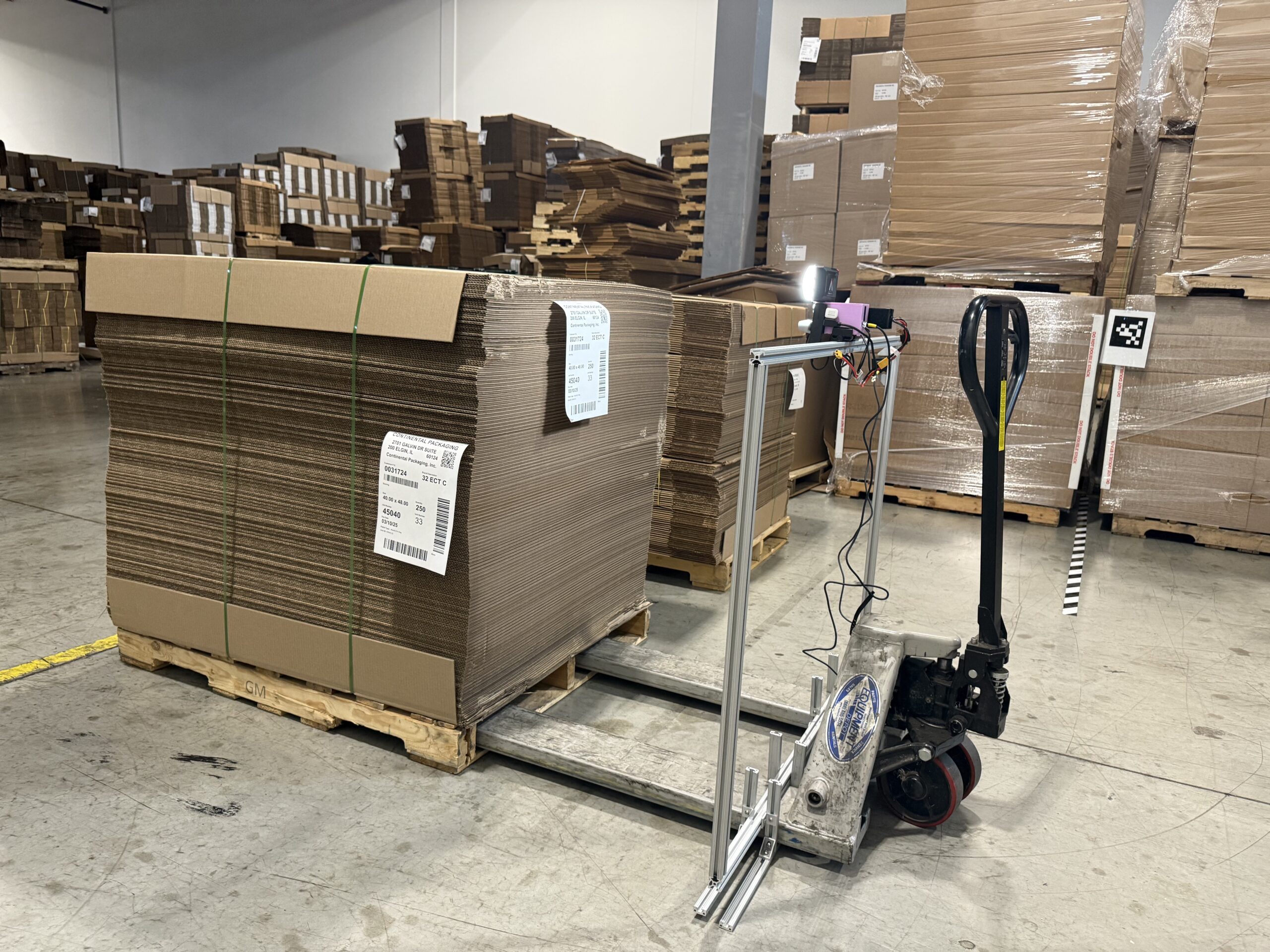
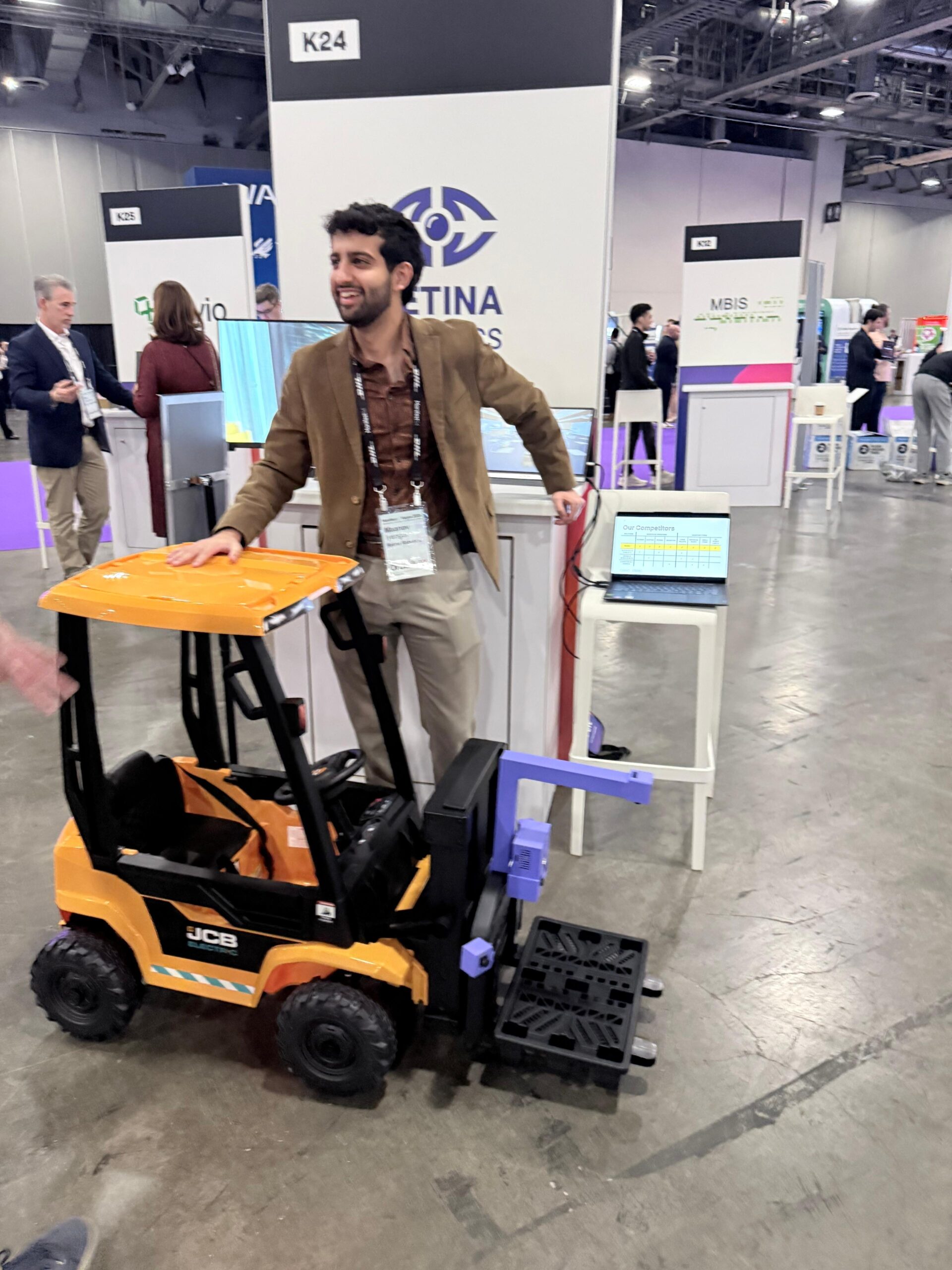
Today, Maanav is the Co-Founder and CEO of Retina Robotics, which commercialized the WAM, a compact, plug-and-play device that mounts onto forklifts and uses computer vision and AI to identify and track warehouse inventory with or without labels, helping prevent misplacements and fulfillment errors without manual scanning. Getting here took a robotics team built from scratch, a patent, a toy company run out of temple halls, a failed real estate venture and 16 months of bootstrapping. Every one of those detours taught him something he still uses.
Made to Lead
Maanav will tell you he’s a product of both his parents. His mom is disciplined and always looking ahead. His dad is charismatic and great with people. “I’ve tried to take as many of those qualities as possible,” he says.
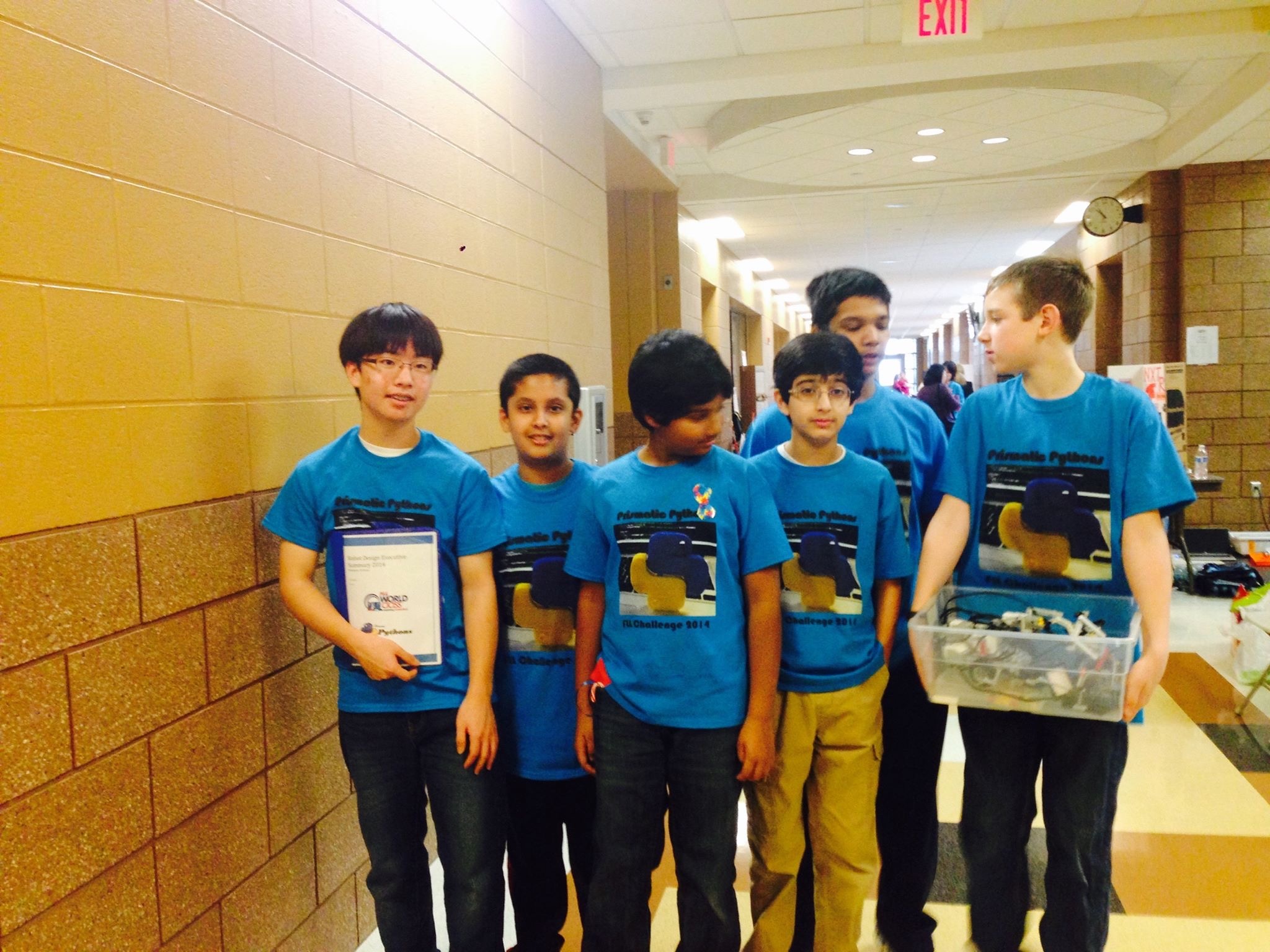
His parents also saw promise in robotics early and introduced him to it in the fifth grade. It wasn’t love at first sight, but it’s where he figured out what he was good at. His was the first and only robotics project at the school science fair, and it drew plenty of attention. In eighth grade, he joined a FIRST robotics team at an organization that had never qualified for a championship. Maanav wanted to code, but the organizer made him team leader instead. That year, the team became the first in the organization’s history to make it to the state championship.
Then in high school, Maanav co-captained his school’s VEX Robotics team to its first-ever World Championship. But he and his co-captain didn’t see eye to eye. Maanav felt the team kept changing its robot when it needed to stay the course, and almost half the team left with him to start a new, independent one.
They had no sponsor, no funding and a pile of donated parts about ten years out of date. They built a practice field out of pool noodles and filled the roster with friends who’d never touched a robot and students who’d been cut from the school team. “I’m sure you must have a chip on your shoulder,” he told them. “Why don’t you join me?”
“I wish I could tell you that things worked out beautifully,” Maanav says. They lost in qualifying as their aging equipment gave out, with motors dying and a controller catching fire mid-competition. But he had learned how to build a team from nothing.
The Problem Behind the Problem
During his senior year of high school, Maanav took on a problem he had seen with his own eyes in India: manual scavenging, where workers, often from marginalized caste communities, are sent into sewers to clear blockages by hand. Others were building robotic arms to clear the clogs. Ironically, after years in robotics, Maanav didn’t think a robotic arm was the answer. He asked a different question: “Why not stop them from forming at all?” His “Prevention Sewer,” designed to fit into any manhole, won the statewide Project Lead The Way engineering competition in Illinois.
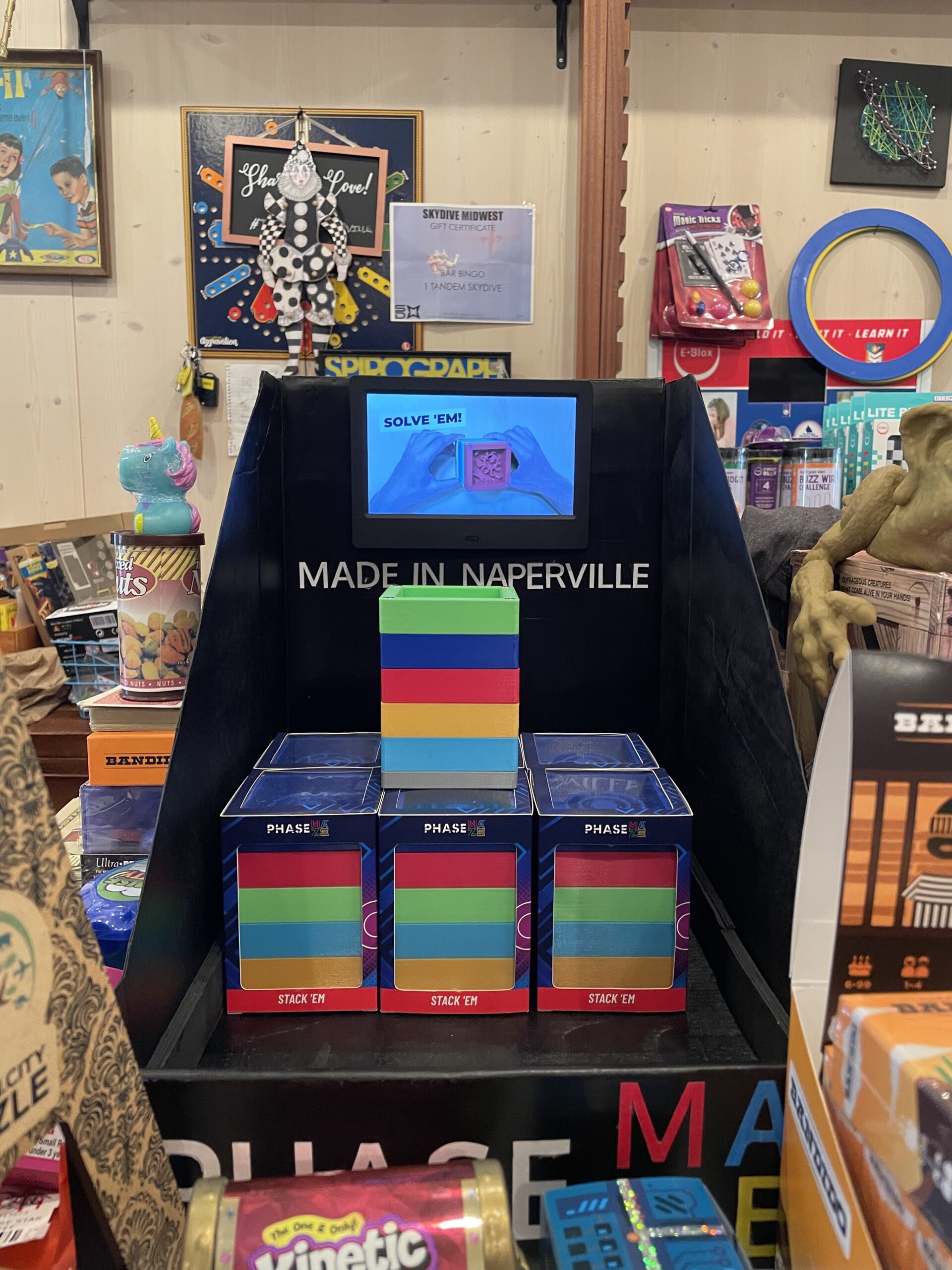
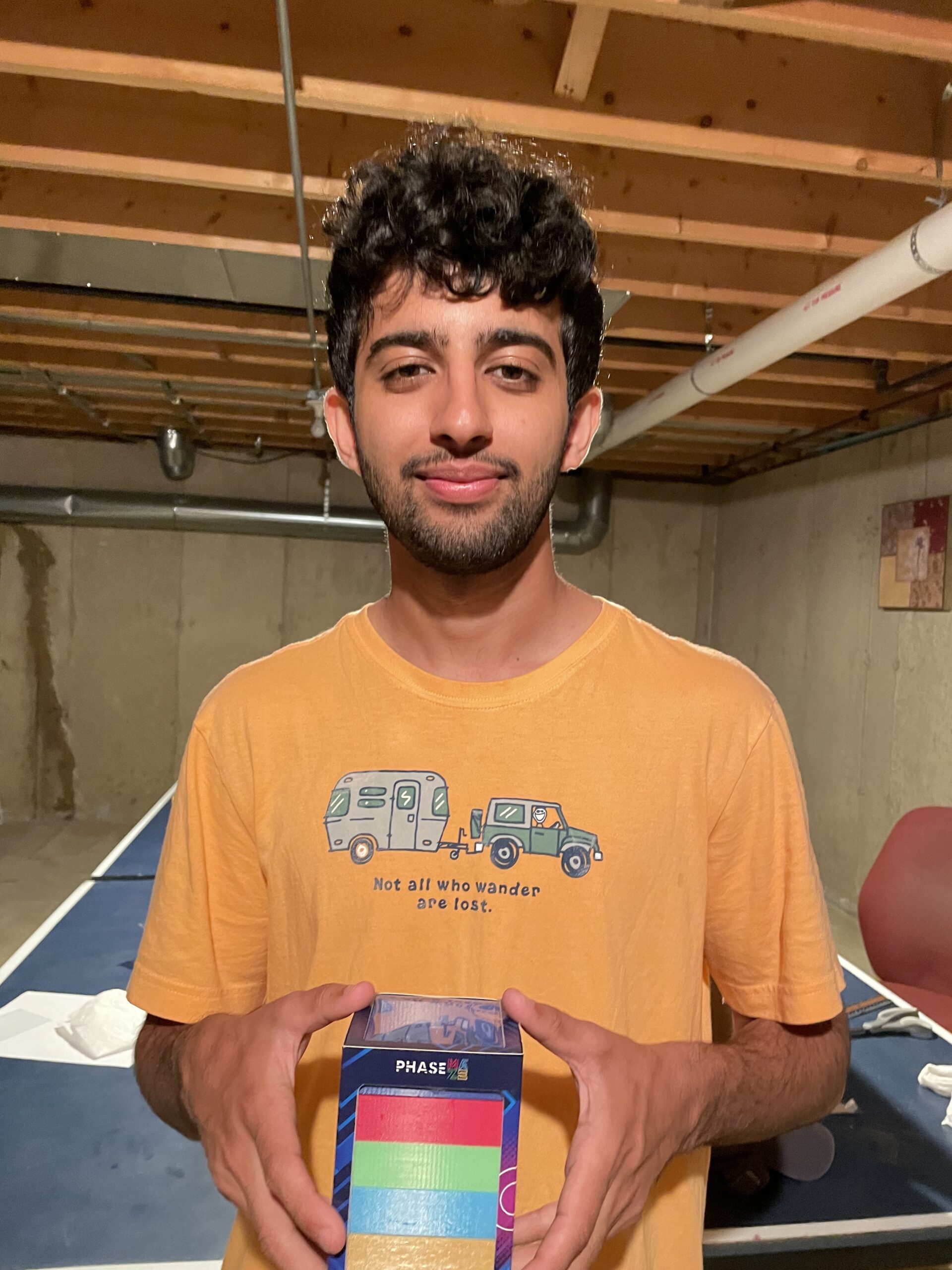
He chose Worcester Polytechnic Institute (WPI) partly so he could patent it. When COVID hit, he had time on his hands and wanted to invent something new. He organized his robotics friends into teams to identify real-world problems and develop novel solutions, promising everyone credit whichever idea was chosen. WPI’s technology director singled out one idea worth pursuing: a toy. It became “Phase Maze.” Maanav and his friends 3D printed and sold hundreds, mostly at pop-up shops at Hindu temples. He’d set the rainbow-colored toy right by the food station, where well-fed kids wandered over and parents found it hard to say no.
Phase Maze taught him how to run a bootstrapped business and, above all, how to really listen to customers.
Virtually Unhirable
At WPI, Maanav became close friends with Vishrut, who is, in Maanav’s words, “part of the reason why I passed my master’s.” Vishrut studied swarms of robots, while Maanav studied how robots and humans work together, and the two spent hours talking through how robots should operate in the real world. Those research backgrounds now shape how they’re building Retina to bridge manual operations and full autonomy.
Vishrut graduated before Maanav and joined a startup using drones to audit warehouse inventory, where he saw firsthand how limited drones really were. He pushed Maanav to build something better together.
Maanav, fresh off a failed real estate venture during his master’s, planned to get a job and keep the idea on the side. But he’d spent nearly every summer starting a new venture instead of interning, leaving him “virtually unhirable” in a tough job market. A job search would likely take a year, and he could spend that year starting a company instead. Vishrut left the drone startup and the two spent the next 16 months bootstrapping Retina Robotics.
Ask, Don’t Pitch
Maanav’s first move during that period was to get inside as many warehouses as he could. He emailed, called, knocked on doors and asked everyone he knew for introductions. “I can’t start a warehouse robotics company without understanding warehouses,” he says.
His approach was simple and he thinks it should be the norm. He never pitched a product or hinted at a solution. To be fair, he didn’t really have one yet. His first idea was to retrofit forklifts to drive themselves, but that fell apart quickly. Instead, he asked warehouse operators open, non-leading questions, something he’d learned selling toys, and let them tell him what was actually broken.
After several dozen of those conversations, patterns started to show up: trouble measuring the dimensions of freight, errors on outbound shipments, and inventory of all shapes and sizes going missing. He and Vishrut took each problem and worked out how to solve it within one unified system. That became the foundation of Retina.
He hadn’t expected to bootstrap for 16 months. He’d watched peers raise hundreds of thousands on little more than a basic prototype and figured he could raise money just as easily. Then he learned the hard way that a patent, a pitch deck and a prototype just don’t cut it anymore. What changed things was focusing on customers instead of investors. “Once I started focusing on the customer, building for them and not the investor, I realized that traction was there,” Maanav says. “And then the investors followed.”
Robots That Work Around Warehouses
The sewer project taught Maanav to look for the problem behind the problem, and he carried that focus on prevention into Retina. While drone audits found inventory errors after the fact, WAM was designed to help prevent them. He also noticed that so many companies in the space build systems they expect their customers to conform to, often requiring significant changes to infrastructure and daily operations. “In reality, you need to build systems that conform to the customer,” he says. “Robots should work around warehouses, not the other way around.”
That thinking points Retina toward the messy warehouses others pass over, where location labels aren’t placed neatly and inventory isn’t perfectly lined up. Earlier estimates suggested that roughly 80% of warehouses had no automation at all, not even something as basic as conveyors. Retina was built for those warehouses. “Most days, we don’t feel like we have a lot of competition,” he says. “If you can solve the unstructured environments, you can solve the structured ones, too.”
He’s equally disciplined about what Retina isn’t. WAM is modular and different setups unlock different capabilities, from tracking pallets to tracking cases to tracking individual items. But the team is honest with customers about what it does well today rather than promising to build a custom answer to every problem. “We’re not a consultancy business,” Maanav says. “We’re a product business. And that distinction was really important to draw early.”
The real competitor, it turns out, isn’t another robot. It’s the handheld barcode scanner, a tool that has become synonymous with the warehouse itself. Bringing in WAM means trusting Retina to replace it as the main way you manage inventory.
Long term, Maanav wants Retina to be a company that helps the world see. That means WAM on vehicles today and on people tomorrow. An upcoming wearable WAM system will bring that vision to people handling smaller, less standardized items. Eventually, he envisions WAM serving as the eyes for fully autonomous robots like humanoids, which have long struggled to work anywhere that isn’t perfectly structured. He pictures a day when anyone can buy WAM off Retina’s website and mount it to a person, a vehicle, a fixture or a robot. Robot makers would design their machines with a WAM-shaped slot already built in.
Not a Unicorn, a Horse
As Retina has grown, Maanav’s definition of success has kept moving. At first, he thought success meant raising money. Then it meant a customer willing to take a chance and let them into the warehouse. Then a paid pilot. Now, it means a customer committing to put WAM everywhere and use it as their main way of managing inventory. “It’s more than just the money,” he says.
When Maanav first heard about Engage from a founder in an earlier cohort, he didn’t quite believe it. Big corporations investing in startups and opening their doors as potential customers? “I thought, there’s no way this is real,” he says. “It’s too good to be true.” Then he got to know the team through mutual connections and realized “this isn’t a unicorn. It’s an actual horse.”
Beyond the capital and the connections, he says the biggest value has been learning enterprise sales. How to find and build champions inside large companies and how to navigate everything that comes with working with them.
And when the ride gets bumpy, he leans on the people around him. “I don’t think anybody can do it on their own,” Maanav says. “It takes a village.” For him, that village is his parents, his partner, his sister, his friends and his family.
Maanav’s Founder Equation
Look back across Maanav’s story and the same thing keeps showing up. He rallied a team of eighth graders, recruited friends who’d never touched a robot, got a room full of temple-goers to buy a toy, and sat down with dozens of warehouse operators just to listen. Each time, it came down to people.
That’s no accident. “No matter what people say, business is still extremely relationship-driven, especially in supply chain,” he says. “It’s a very small circle.” And in his view, no relationship works without two things: communication and empathy. “If everybody in the world had communication and empathy, we would have no problems, no wars, no famines,” Maanav says. “Unfortunately we do. But those of us who can act in that manner should act in that manner, and the success will come.”
So when asked for his equation for success, his answer comes straight from how he’s built everything so far:
Relationships + Communication + Empathy
The kid with the toilet paper business plan is still building. These days, the plans are just a little bigger.
Recent Comments