

Power to Change the World: Haroon Inam’s Journey to DG Matrix
When you meet Haroon, Co-Founder and CEO of DG Matrix, the first thing that strikes you isn’t the scale of what he’s building — a power-electronics platform capable of reshaping the world’s electricity infrastructure — but the humility with which he describes the journey. For a founder who has generated billions of dollars in pipelines and revenue over his career, led a company to a public listing, and raised nearly half a billion dollars, Haroon carries himself with the quiet curiosity of someone still trying to learn, improve, and build.
That humility, like much of his story, begins in Pakistan.
Roots: Fire, Focus, and Fearlessness
Haroon was raised in a home defined by two starkly different forces: his father, an unshakeably honest government officer in a system where honesty was rare, and his mother, whose determination and fire burned even brighter than the circumstances she grew up in.
Haroon’s mother hadn’t been educated beyond the 10th grade, and she was determined that her children would go further. So she put Haroon and his sisters in the American school in Islamabad, even if it meant stretching the family beyond comfort.
Haroon laughs now recounting those years: gum-chewing, free-spirited, completely uninterested in studying. His mother saw it differently. He needed discipline, so she pulled him out after eighth grade and enrolled him in Aitchison, Pakistan’s most elite and notoriously strict boarding school. A British colonial relic turned national institution, Aitchison was a universe away from Haroon’s childhood freedom and brought him into a world with precision, rules, and the occasional slap to the back of the head for hair that was even slightly too long.
“It was a rude awakening,” he admits. But it was also the launchpad, ultimately landing him at Duke University as a freshman.
His mother’s fire wasn’t just educational, either. She later became a Member of Parliament, photographed with heads of state from Rajiv Gandhi to Chinese leadership to the Saudi royal family, while his sisters ended up graduating from Princeton and Harvard. From his mother, Haroon absorbed the kind of ambition that believes you can (and must) keep trying, aiming higher each time.
A Pivot That Changed Everything
Haroon arrived at Duke to study economics, but something in him wanted to prove he was more than just ambitious. He was tough. So he pivoted into electrical engineering, one of Duke’s most rigorous programs and home to one of the top power-electronics tracks in the world.
That single decision rooted in challenge, pride, and maybe even a little fear became the foundation of everything that followed.
He earned both his Bachelor’s and Master’s in Electrical Engineering at Duke, then spent years in industry leading major product platforms, generating billions in business. He founded early startups, launched a digital magazine, and later became CTO of Smart Wires, Inc where he helped secure over $350M in funding before it went public.
These experiences hardened him, but also clarified something deeper: success wasn’t just about money any more. It was about the development of people, of ideas, of systems that could change the world.
A Breakthrough Born From Failure
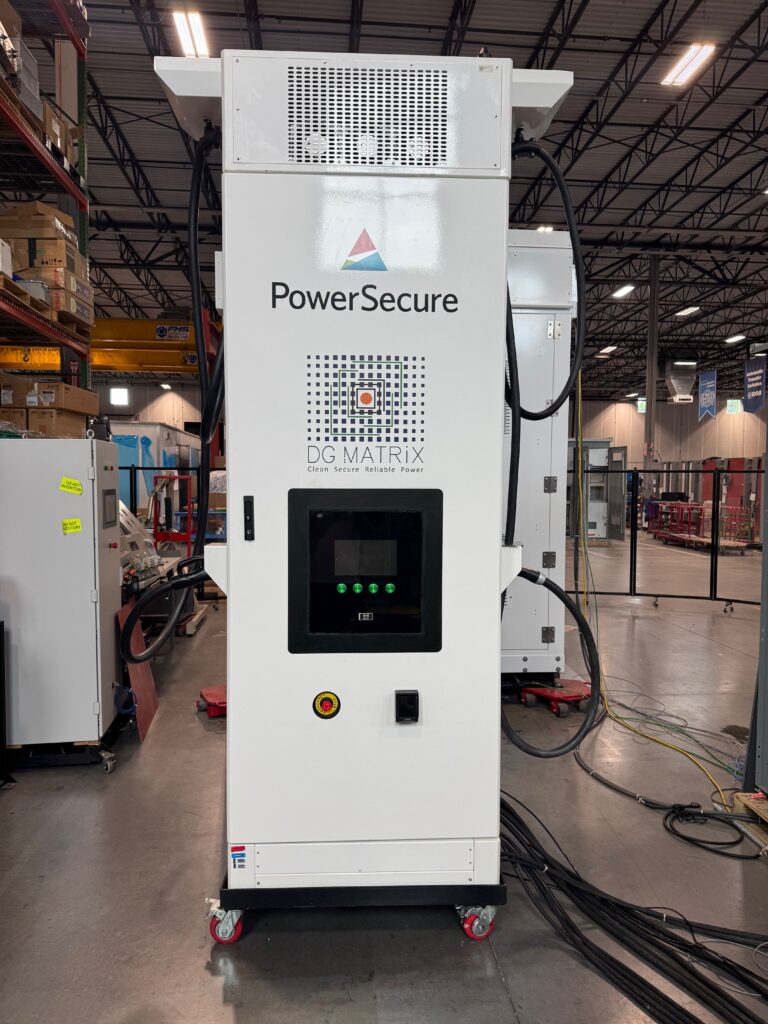
DG Matrix began almost accidentally during a long technical conversation on a road trip with longtime friend Dr. Subhashish Bhattacharya, a discussion that ultimately spiraled into a shared realization: they had enough combined knowledge to rethink uninterrupted and clean power delivery from the ground up. That spark became the foundation for DG Matrix, which now delivers lower energy costs and greater energy resiliency with their Power Router — an integrated hardware and software total energy management solution designed for global deployment across C&I facilities and AI datacenters.

DG Matrix Co-founders (Subhashish & Haroon)
By then, Haroon had already generated deep reservoirs of trust. Early funding came through personal contacts of people betting on him, not just the idea. He built an offshore engineering team, hired young high-discipline talent, and started building prototypes.
And then they failed.
Again.
And again.
And again.
Each iteration proved the physics, just not the execution. For a lesser team, it would have been demoralizing. For Haroon, it was motivation. Grit was baked into his story.
Then it happened. The prototype that was supposed to hit a certain power threshold blew past expectations, delivering nearly 2x the designed power. It was the moment DG Matrix became real.
By April 2024, they installed the first system in Durham, NC: a 200-kW multi-port Power Router (programmed as a charger) that was compact, quiet, resilient, and assembled in a handful of hours versus 200+ for an equivalent legacy architecture. A true hardware leap.
And suddenly, markets started listening.
Building the Factories of the Future
DG Matrix will soon operate two almost identical factories, one already running in Lahore, Pakistan and a near-carbon-copy one under development in Raleigh, North Carolina.
Lahore is a talent engine. They have about 250 engineers, more than 10 PhDs, top graduates returning from the US and Europe, many best-in-class AI engineers who are also women, and a machine shop running 20 hours a day.
Both factories are designed to hyperscale. Each “perfected work cell” requires only 20 factory workers to generate $100–$200 million of annual revenue. AI-driven quality systems, ERP/MRP integrations, and generative design tools compress workflows that once took 900 person-days down to 2 hours.
DG Matrix is the rare hardware startup that behaves like a software company with rapid iteration, deep integration, and compounding speed.
A Global Opportunity with Local Relationships
Markets are pulling DG Matrix in every direction at once from data-center power systems and microgrid infrastructure to fleet and building electrification. Electricity prices are up 30% in five years and may double again in the next five. Demand is accelerating faster than the industry can respond, and DG Matrix’s top customers alone represent a billion-dollar pipeline. Partnerships with Nvidia and strategic investment from ABB, Chevron, Cerberus, Clean Energy Ventures, along with a $20M raise in 2024, signal how central DG Matrix could become to global electrification.
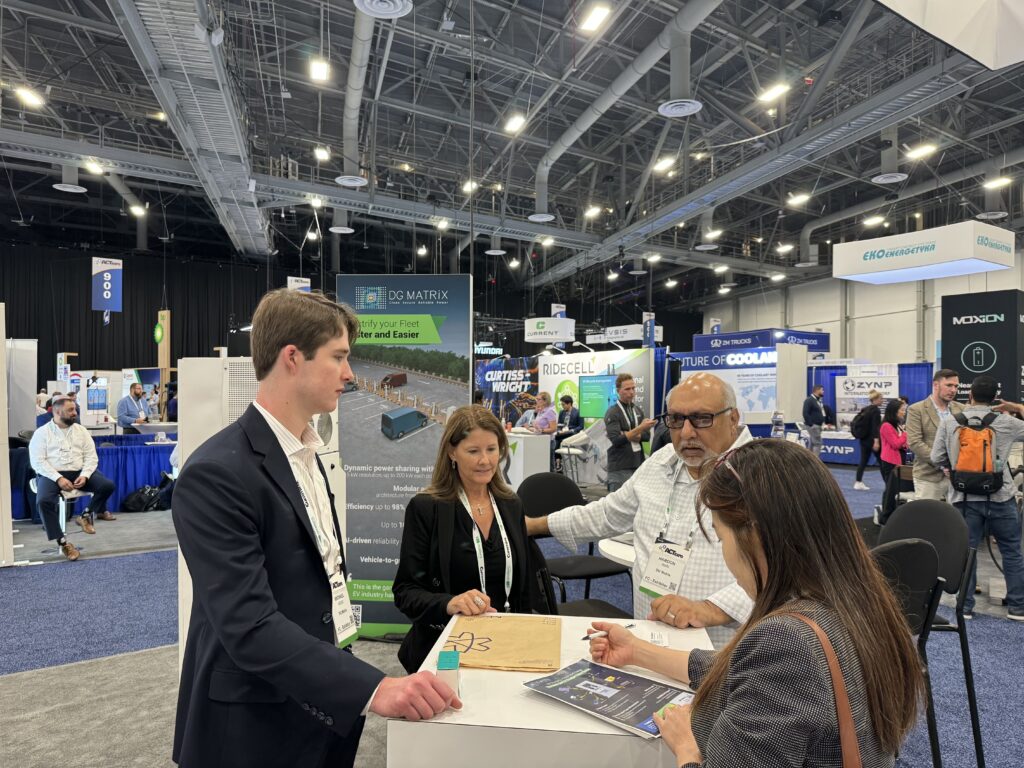
That same momentum is what drew Haroon to the Engage ecosystem. It wasn’t only Atlanta’s Fortune 500 access, though that mattered. It was the people behind the program and the conversations, the trust, the sense that this was a community built to help founders win. To Haroon, that spoke directly to the principles he leads with: relationships over transactions, talent over titles, people over everything. He isn’t just building a company, he’s developing future C-levels, future CEOs, and future leaders. That, he says, is legacy.
The Mission: Clean, Cheap, Universal Power
DG Matrix isn’t just tackling a commercial opportunity, it’s pursuing a global mission to deliver cheap, clean electricity anywhere in the world in under 6 months, and soon at gigawatt scale. The same way cellular networks leapfrogged landlines.
Fast, lower-cost reliable energy for AI and regular factories.
Microgrids for supermarkets and box stores.
Resilient power for hospitals.
Power for remote mines and villages.
A path out of energy poverty for hundreds of millions.
As Haroon says, “Power is power.” The ability to deliver it anywhere changes everything.
It’s audacious.
But then again, Haroon has never aimed small.
The Founder Equation
Throughout this interview, Haroon thoughtfully reflected on why his journey from Islamabad to Duke to the frontier of global power innovation has unfolded the way it has.
It traces back to his mother’s fire, his father’s integrity, the discipline of Aitchison, the rigor of Duke, the failures that became breakthroughs, and the belief that you keep trying, aiming higher each time. His founder equation captures it simply:
“Hard Work + Timing + Grit.”
Recent Comments