
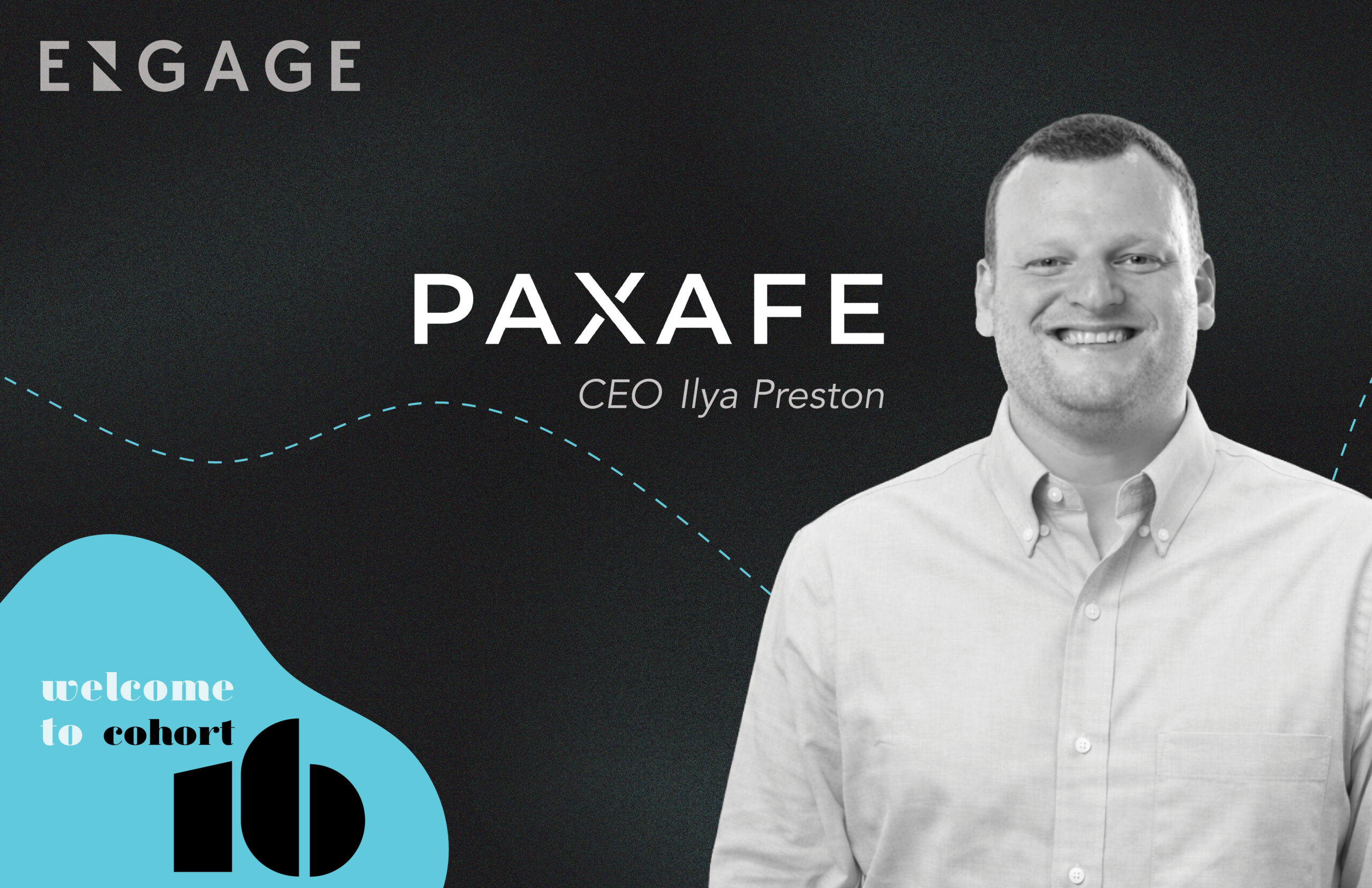
What Happens When Supply Chains Can Finally Think: Ilya Preston’s Journey to PAXAFE
Many founders talk about “disrupting industries.” Ilya Preston talks about eliminating the invisible decisions that quietly cost companies billions.
Before co-founding PAXAFE, Ilya spent years inside complex global supply chains, first at Cummins and later in consulting, where he kept seeing the same problem repeated at scale. Teams were drowning in disconnected data, manually stitching together information just to answer simple operational questions. During one pharmaceutical project, he found himself in a room with more than 20 consultants whose entire job was piecing together fragmented supply chain data into something actionable.
That moment became the spark behind PAXAFE.
For Ilya, the issue wasn’t a lack of data. It was that every decision sat in its own silo — planning,, logistics, quality, IT & digital teams — all operating independently while product loss was treated as unavoidable. In industries like pharma and food, those inefficiencies can mean spoiled shipments, wasted inventory, delayed treatments, and billions in losses.
So instead of building another dashboard, PAXAFE set out to become something much bigger: an intelligence layer for time, temperature, and value sensitive supply chains.
Learning the Hard Way, and Pivoting Fast
Like many startups, PAXAFE’s earliest version looked a bit different from the technology you see today.
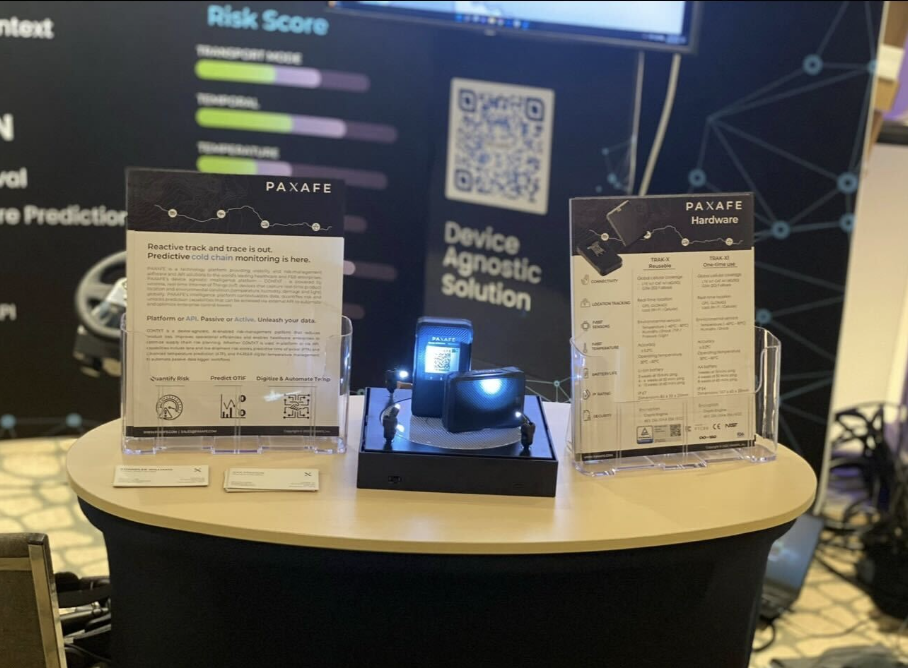
Initially, the business combined hardware and software using IoT tracking devices as a familiar entry point for customers. Ilya describes the hardware as a “Trojan horse,” a way to introduce companies to real-time shipment intelligence while the team quietly built the much more sophisticated software platform behind the scenes.
But the market wasn’t ready yet.
Pharmaceutical companies were hesitant to buy hardware from a young startup without massive global infrastructure. At the same time, customers were only beginning to understand the value of IoT data itself. By 2022, it became clear the bigger opportunity wasn’t in the devices. It was in helping companies operationalize the data already flowing through their systems.
That realization led PAXAFE to make one of its most important decisions. Fully hardware agnostic.
The pivot sharpened the company’s focus around software, analytics, and AI-driven decision-making, allowing the team to move from simply tracking shipments to helping enterprises predict and prevent failures before they happen.
Today, PAXAFE works with major global enterprises across pharma, food and beverage, manufacturing, and other cold chain industries where even small disruptions can create enormous downstream consequences.
Building for the Hardest Problems First
One thing that stands out when talking to Ilya is how intentionally the company approached market selection.
PAXAFE originally explored everything from electronics to oil and gas logistics, but eventually narrowed its focus to cold chain, one of the most operationally demanding environments in supply chain management.
The stakes were higher. The regulations were stricter. The consequences of failure were immediate. That was exactly why the team leaned into it.
Cold chain became the proving ground for PAXAFE’s platform because it forced the company to solve the hardest version of the problem first. And over time, that focus revealed a much larger opportunity. Every industry handling time, temperature, or value sensitive goods faces similar coordination and visibility challenges.
That insight now shapes the company’s broader vision of becoming the intelligence operating system for sensitive shipments globally.
The Shift from Corporate to Founder Mindset
One of the most interesting parts of Ilya’s story is how dramatically his mindset evolved after becoming a founder.
Coming from consulting and large enterprises, he was conditioned to seeking perfect information before making decisions. But startups don’t allow for that luxury. Over time, he learned that action itself creates information.
Instead of waiting for 99% certainty, founders often need to move with 100% confidence but just 70% input data, make the decision, and learn quickly from the outcome. That mentality became critical as PAXAFE navigated pivots, market education challenges, and the realities of building an early-stage company.
He also admits he underestimated how important culture and soft skills would become.
In companies with fewer than 25 people, one weak link can impact everything. Technical expertise matters, but communication, trust, alignment, and execution matter just as much, sometimes more.
And for Ilya, execution ultimately became the clearest measure of success.
Not titles. Not press. Not pedigree.
Just the ability to consistently hire the right people, build the right product, secure customers, and solve real problems at scale.
A Different Kind of Accelerator Experience
When PAXAFE joined Engage, Ilya initially worried about perception.
As a post Series A company entering an accelerator-style program, he questioned whether it would make sense strategically. But that hesitation quickly disappeared once the cohort began.
What stood out most was the level of commitment from Engage’s corporate partners. Instead of passive networking conversations, the introductions led to meaningful demos, operational discussions, and real use-case exploration with companies genuinely interested in solving supply chain challenges.
For a company entering its next phase of scale and repeatability, those conversations mattered far more than surface-level exposure.
Ilya’s Founder Equation
Seven years into building PAXAFE, Ilya still talks about the business with the mindset of someone solving a deeply operational problem, not chasing hype.
At its core, the company exists to reduce friction across systems that quietly power everyday life. Whether it’s pharmaceuticals, food shipments, automotive manufacturing, or industrial goods, the underlying challenge is often the same: too much fragmented information and not enough coordinated intelligence.
And while AI has become the buzzword of the moment, Ilya’s perspective remains grounded in execution and timing.
When asked what drives startup success, he keeps it refreshingly simple:
“Insight + Timing + Execution”
In the end, the companies that win aren’t always the loudest. They’re the ones that execute relentlessly on problems that truly matter.
Recent Comments